A delegation from Northwest University's School of Regional and Country Studies recently conducted an eight-day study in Uzbekistan. This research trip was part of two major National Social Science Fund projects: "Central Asian Economic History Research" and "Sino-Central Asian Relations Since the Sui and Tang Dynasties." Professors Huang Minxing and Li Dawei led the team.
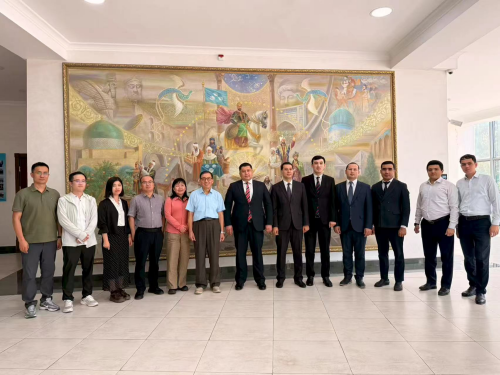
In Tashkent, the delegation visited the Uzbekistan National History Museum, which showcases the evolution of civilizations from the Stone Age to post-1991 independence. The exhibits highlight the convergence of Sogdian, Persian-Islamic, Chinese, Russian, and Western civilizations in Central Asia. The museum also reflects Uzbekistan's efforts to construct a national identity through historical narratives. The newly opened Islamic Civilization Center uses digital technology to present the country's achievements from an Islamic cultural perspective. The delegation noted the country's language policy shifts, promoting Uzbek and English while reducing Russian's presence, with Chinese emerging as a key language for international exchange.
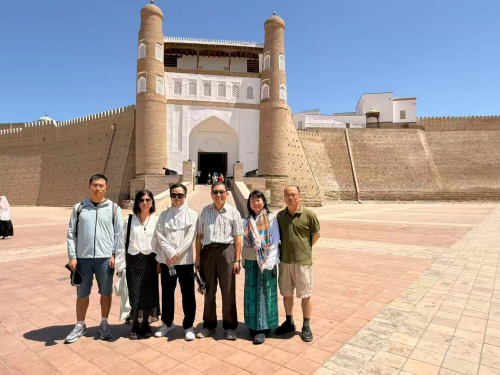
Uzbekistan, a crucial Silk Road hub, shares deep historical ties with China. The delegation discovered Sogdian-era Tang-style coins at the National History Museum and ancient Persian miniatures at the Ulugh Beg Observatory site. A model of a BYD factory in the Islamic Civilization Center illustrates recent Sino-Uzbek cooperation under the Belt and Road Initiative.
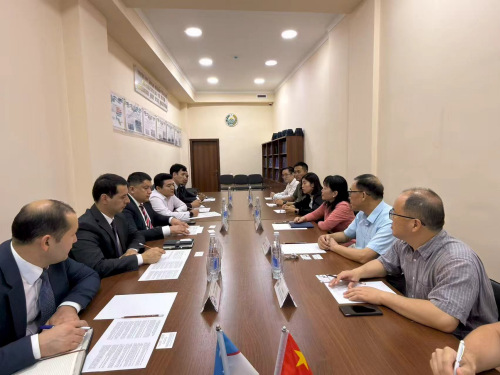
At Tashkent State University of Oriental Studies, the delegation discussed potential collaborations in historical research, archaeology, and academic exchanges, laying a foundation for future cooperation.
The study tour achieved its goals, providing insights into Uzbekistan's ancient heritage, nation-building, socio-economic progress, and diplomatic strategies, while opening new avenues for Northwest University's research endeavors.
原文链接:
http://education.chinadaily.com.cn/2026-08/24/c_1207995.htm