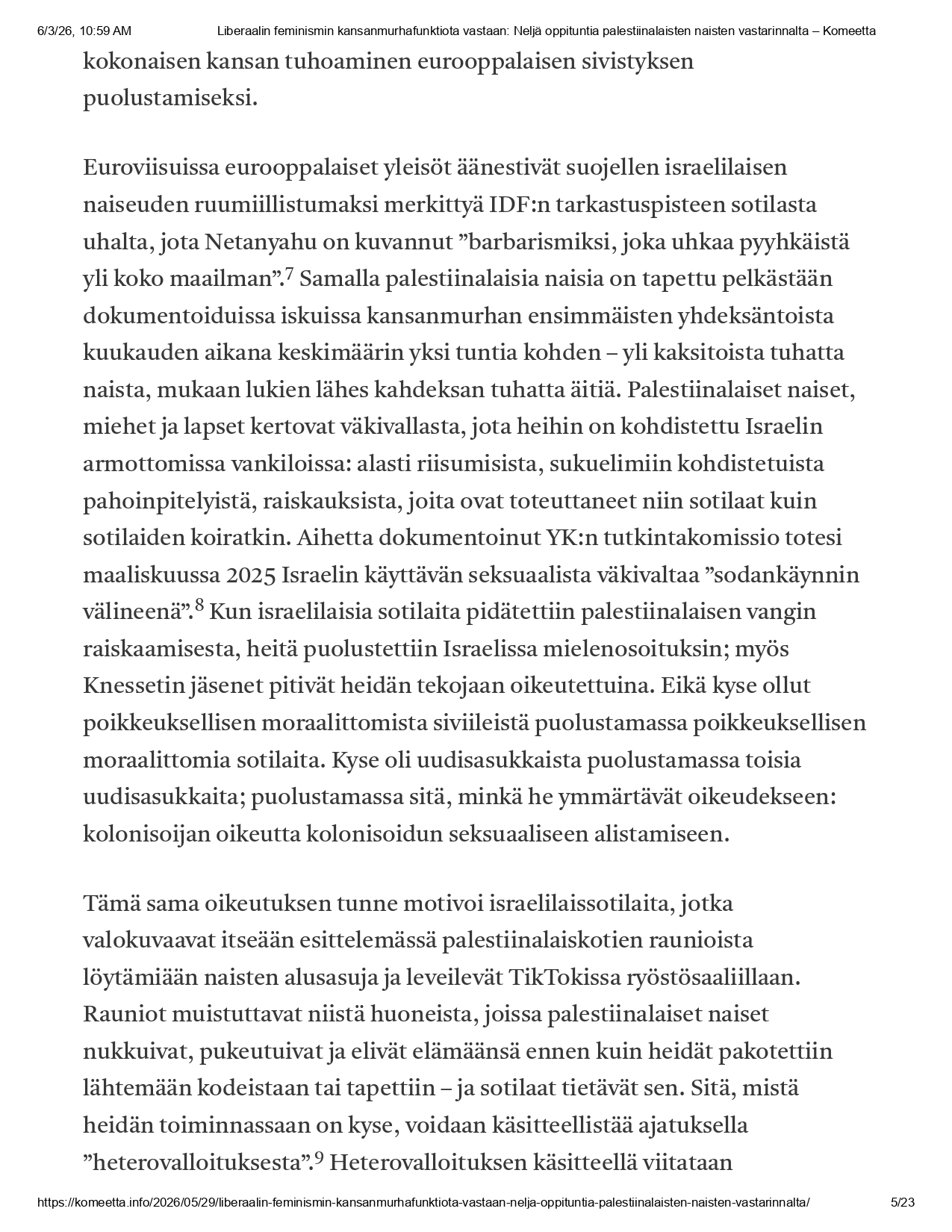
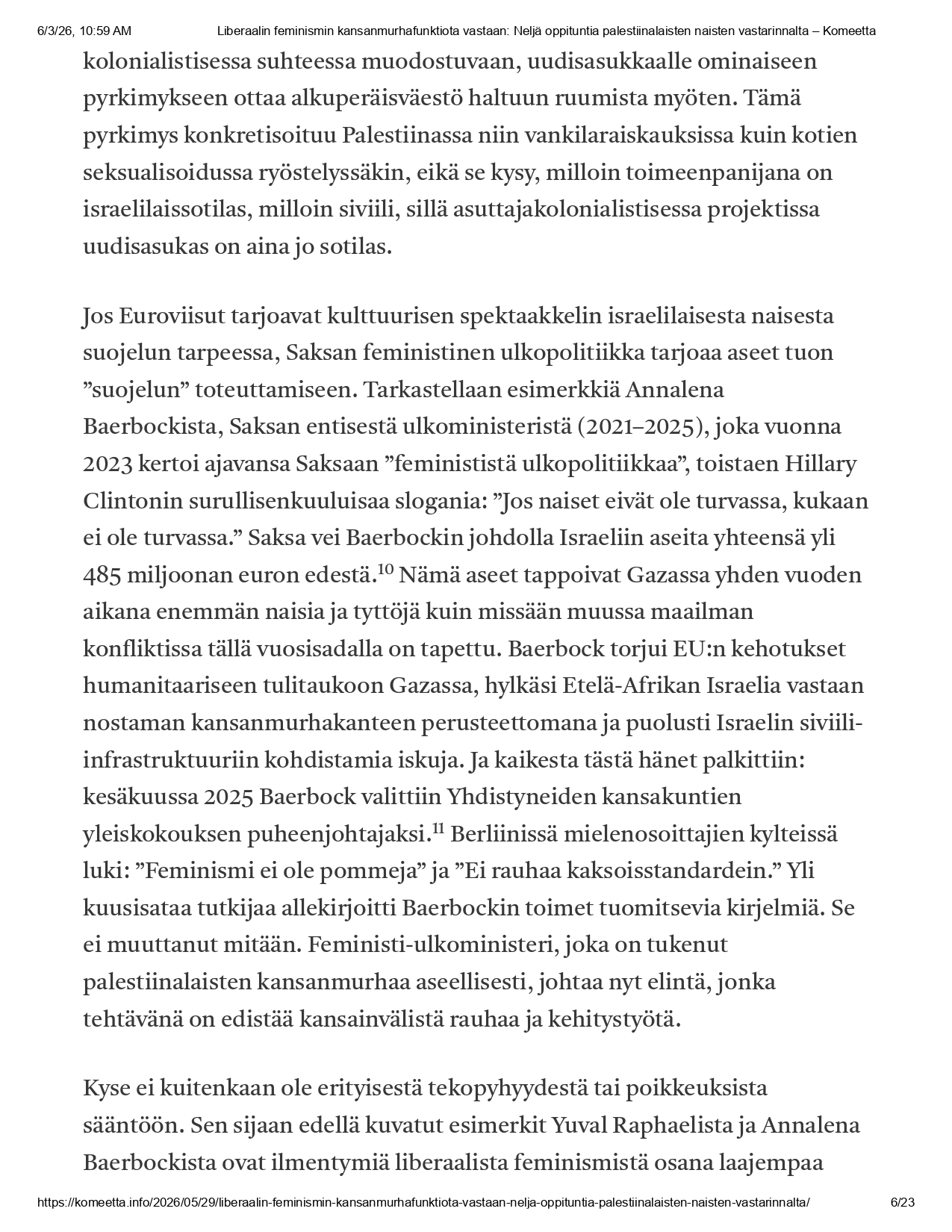
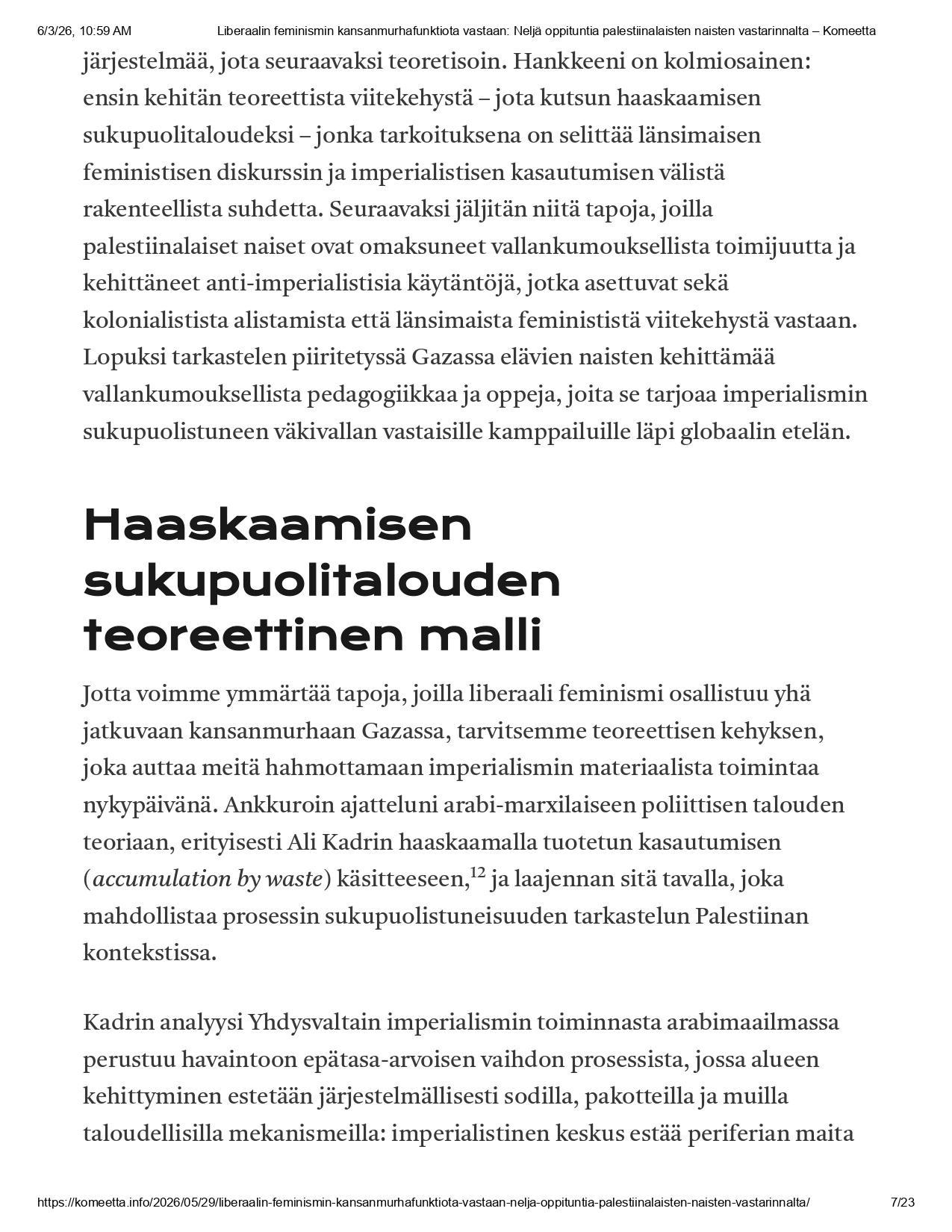
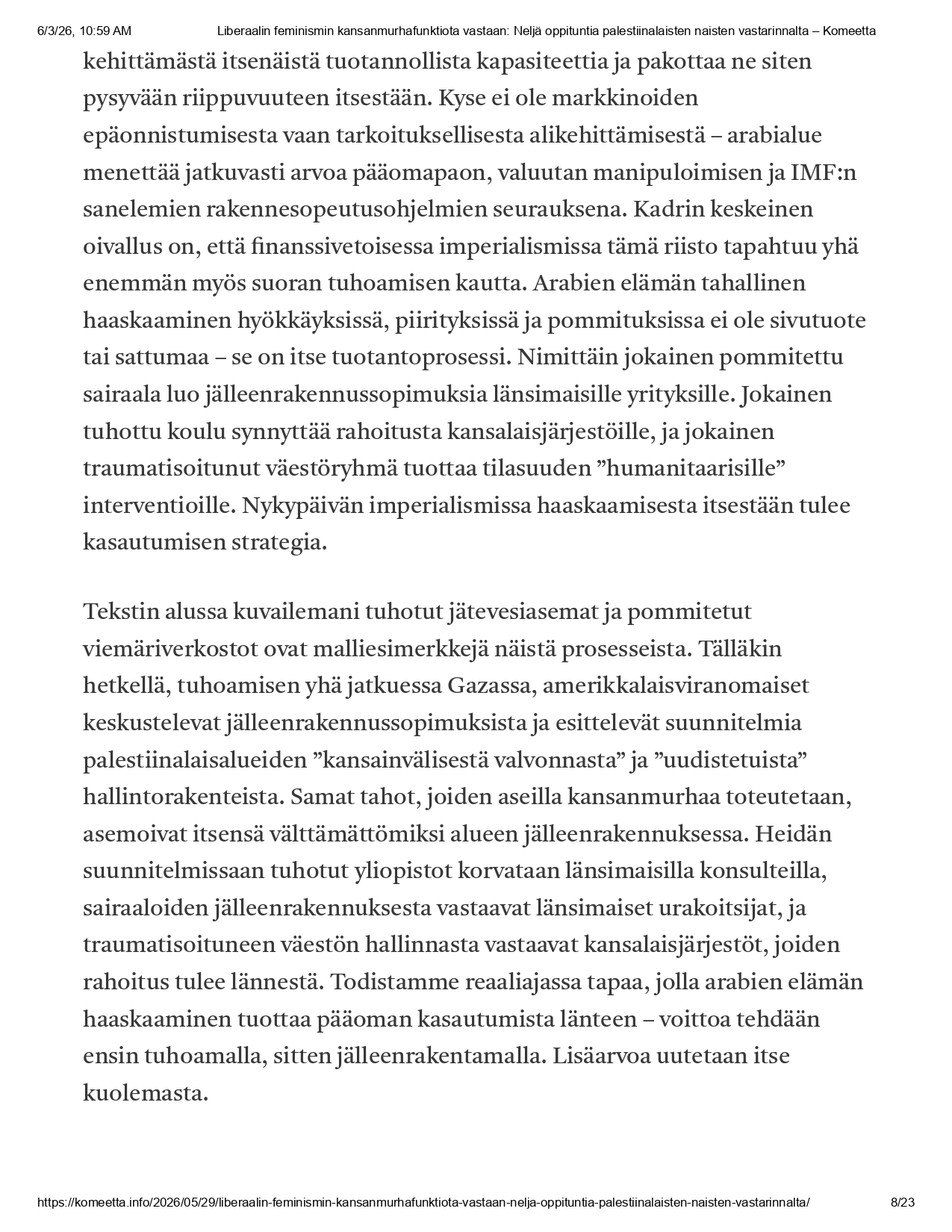
近日,我院婉澜(Walaa Alqaisiya)副教授在英国皇家地理学会的讲座内容被译为芬兰语,并由Komeetta出版。该文来自于婉澜(Walaa Alqaisiya)副教授2025年12月18日受邀在英国皇家地理学会(RGS—IBG)性别与女性主义地理学研究小组(GFGRG)线上系列讨论会专题讲座。
婉澜副教授认为:西方主流自由主义女性主义非但没有挑战殖民暴力,反而屡屡成为为殖民暴力合理化的道义说辞。当以“女权”名义的外交政策默许军火贸易,西方国家动辄借捍卫女性权益为由发起军事行动,聚焦在现有权力框架内谋求个体权益的女权运动,最终反倒巩固了既有权力体系,而非将其瓦解。婉澜副教授进而回顾了巴勒斯坦女性百年来的抗争历史,从1936年至1939年的大起义,到如今身处封锁围困下加沙女性的斗争。她以此论证,女性的真正解放,并非在不公的现有秩序中分一杯羹,而是构筑起全新的社会秩序。
英国皇家地理学会(The Royal Geographical Society,简称RGS-IBG),全名为皇家地理学会(附设英国地理学家学会),是英国历史悠久、规模较大的学术团体之一,也是世界上最早成立的地理学术组织之一,总部位于伦敦肯辛顿的洛思尔府。该学会成立于1830年,其旨在通过资助探险、支持科研和推动教育来促进地理科学的发展。学会在19世纪英国探险的“黄金时代”发挥了重要作用,推动了人类对非洲内陆、北极、南极以及喜马拉雅山脉等地的认知。1995年,皇家地理学会与英国地理学家协会合并,进一步强化了其在地理研究、教育和政策咨询方面的地位。
皇家地理学会拥有世界上规模较大的地理学档案之一,收藏了数百万份地图、探险日记、照片和文物。学会设有完善的学术奖励体系,包括皇家奖章、维多利亚奖章等,并定期举办国际学术年会,是全球地理学家交流与合作的平台。现有会员16000余名,婉澜副教授亦是其中一员。
On 18th of December 2025 Dr Walaa Alqaisiya was invited to deliver a lecture at the Royal Geographical Society (RGS-IBG) — founded in 1830, one of the world's oldest and most distinguished learned societies for geography. Her talk was part of the RGS's Gender and Feminist Geographies Research Group (GFGRG) online seminar series, a leading international forum for critical geographical scholarship. The lecture has since been translated into Finnish and published by Komeetta.
In this lecture, Dr Alqaisiya makes a provocative argument: that mainstream Western and liberal feminism, far from challenging colonial violence, has too often supplied the moral language that justifies it. Pointing to "feminist" foreign policies that approve arms sales, and to the way women's rights are invoked to defend military campaigns, she shows how a feminism focused on individual empowerment within existing structures of power ends up serving those structures rather than dismantling them. Against this, she turns to the long history of Palestinian women's resistance — from the Great Revolt of 1936–1939 through to women living under siege in Gaza today — to argue that the real emancipation of women cannot be separated from collective, class-conscious struggle against colonisation and imperialism. Liberation, in this view, is not a seat at the table of an unjust order but the building of a different one — and the women of Palestine, she argues, are already teaching us how.